
MARKET INTELLIGENCE
Canadian Small Caps 2026: TSXV, CSE and TSX Explained
The TSXV just posted its best 20-year performance cycle. The CSE is quietly becoming the entry point for a new generation of resource and technology issuers. And the TSX senior tier is generating margins that have run ahead of analyst models. The setup across all three markets is worth understanding.
May 29, 2026 | Micro Math Capital Research
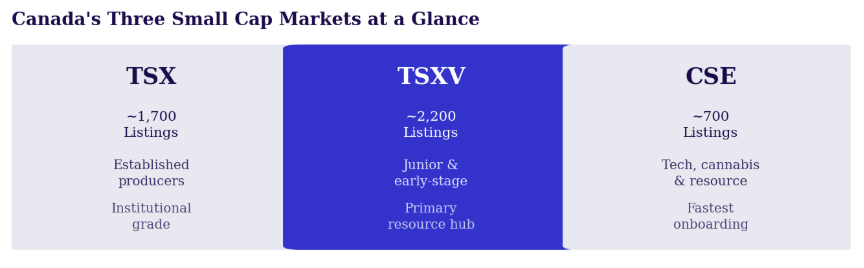
Canada’s three small cap markets, each with a distinct mandate, issuer profile, and investor base.
The TSXV: The Numbers Were Historic
The 2026 TSX Venture 50 is the clearest evidence of what happened in junior Canadian markets last year. The cohort of top performers grew their combined market cap by $17.9 billion in 2025. That is the largest single-year increase in the ranking’s 20-year history. Average share price appreciation across the 50 names: 431 percent. Trading volumes on the TSXV doubled year-over-year to 13.2 billion shares. Forty-eight of the 51 companies on the list were miners.
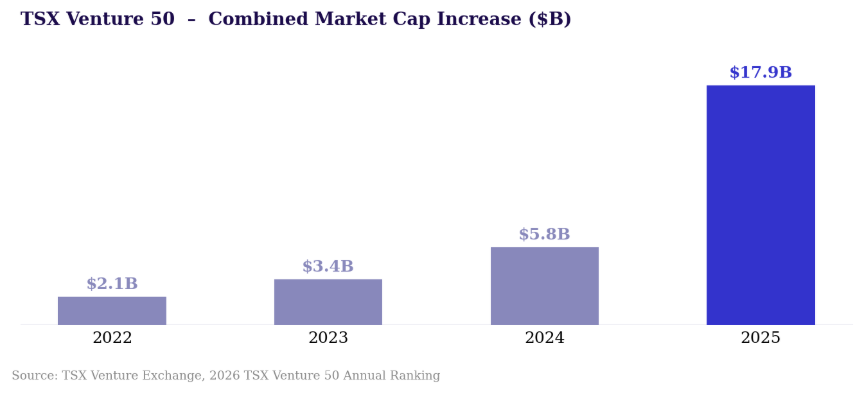
TSX Venture 50 combined market cap increase by year ($B). The 2025 figure of $17.9B is the largest in the program’s history.
The names at the top tell the story. Santacruz Silver Mining (TSXV: SCZ) finished 2025 with a 1,137 percent increase in market cap. Ucore Rare Metals (TSXV: UCU), a Nova Scotia-based rare earth developer, posted 1,109 percent. Several of the top 10 performers remain years from commercial production. Their returns were not driven by cash flow. They were driven by commodity price leverage and a sector rotation that finally found the junior end of the Canadian resource market.
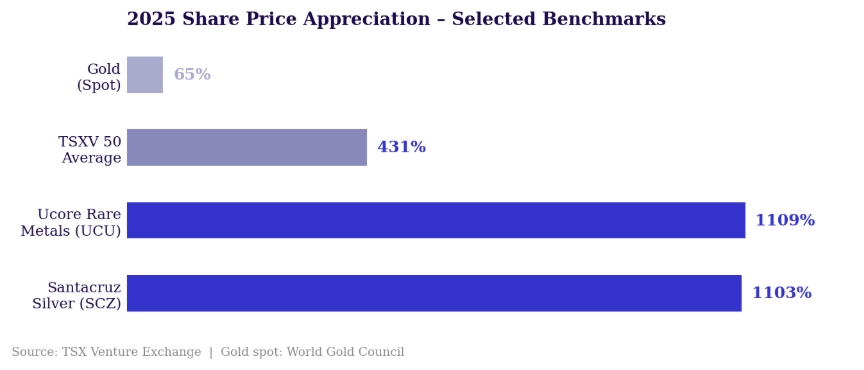
2025 share price appreciation: selected TSXV top performers versus gold spot price. Returns reflect leverage to commodity prices, not production growth.
When gold clears $4,500 and silver breaks 45-year records, the in-ground value of undeveloped assets reprices sharply. Junior explorers carry the most leverage.
The companies that rode the wave without underlying asset quality will give back more than they gained when the cycle turns. The analytical work does not change in a bull market. It gets more important.
Critical Minerals: The Second Layer
Precious metals captured the headlines, but critical minerals are the more durable structural story on the TSXV. Canada holds the second-largest undeveloped rare earth resources outside China, the world’s highest-grade uranium jurisdiction in Saskatchewan’s Athabasca Basin, and over 100 million tonnes of measured and indicated copper resource. Copper, uranium, rare earths, and battery materials all face supply deficits that are not resolved quickly, and mine development timelines are measured in years.
| >100Mt Contained copper (measured & indicated) | #2 Global rare earth resources ex-China | $1.4B+ Equity raised by TSXV miners in 2025 |
Institutional buyers who spent years avoiding the junior end of the market are now approaching TSXV-listed critical mineral developers as early-stage supply chain entry points. That framing change has expanded the eligible investor base and improved the quality of capital coming into the exchange.
The CSE: Faster Access, Wider Net
The CSE lists over 700 companies across technology, fintech, psychedelics, and a growing junior resource cohort that chooses it for lower listing costs and faster regulatory approval timelines. For issuers where time to market matters, it is the practical choice.
The investor lens requires calibration. The exchange’s broader mandate means a wider variance in issuer quality than the TSXV. The historical rate of delisting and issuer failure has been higher. That is the cost of the lower barrier to entry. The analytical work required to separate the durable from the disposable is heavier on the CSE.
The TSX: Where the Margin Story Lives
The senior exchange is where the cycle matures. TSX-listed producers in gold, silver, copper, and uranium are generating margins that have outpaced analyst models for two consecutive years. Agnico Eagle was up more than 140 percent in 2025 with AISC below $800 per ounce. Barrick posted approximately 175 percent returns. Cameco and the uranium producers have repriced with the nuclear renaissance.
Many TSX senior producers are still trading at multiples calibrated for lower commodity prices.
The graduation pipeline from the TSXV to the TSX adds a second layer of opportunity for investors tracking projects from early-stage entry through to senior listing. That continuity across all three markets is one of the structural advantages of the Canadian small cap ecosystem that does not exist in most other jurisdictions.
The Macro Context
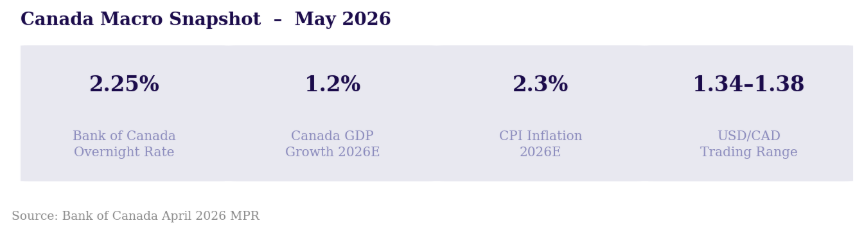
Key Bank of Canada macro indicators, May 2026. Source: Bank of Canada April 2026 MPR.
For companies generating USD commodity revenues with CAD operating costs, a weaker dollar and lower domestic rates are a direct positive on margins. The Bank of Canada is at 2.25 percent, GDP growth projected at 1.2 percent for 2026, and the Canadian dollar trading in a 1.34 to 1.38 range against the USD. That combination is well represented in both the TSXV and TSX resource sectors right now.
What We Are Watching
Gold and silver price levels remain the primary lever for TSXV valuations. A sustained pullback compresses junior exploration multiples faster than most models assume. Critical minerals policy development in Canada, the US, and the EU carries the most asymmetric impact on institutional demand for the TSXV.
Private placement activity is the leading indicator worth monitoring most closely. The volume and pricing of non-brokered financings each month signals institutional appetite for the junior end of the market before it shows up in public prices. When anchor investors pull back or pricing deteriorates, the equity markets follow. The current environment has been constructive. Whether it stays that way depends on gold, energy prices, and the broader risk appetite for early-stage assets across the rest of 2026.
Published by Micro Math Capital for information only, not investment advice or a recommendation to buy or sell any security. Information is from public sources believed reliable but not guaranteed, and investing carries risk including possible total loss, so do your own research and consult a licensed advisor. This is independent editorial commentary; Micro Math Capital was not compensated and none of the companies mentioned is a client.
micromathcapital.com
Meta: A look at Canada’s three small cap markets in 2026: the record TSXV run, critical minerals, the CSE, and where the opportunity sits.